DM766-PA Wood Grain Sublimation Base Powder
DAMEI supplies DM766-PA, an outdoor polyester base powder for wood-grain transfer on pretreated aluminum profiles and steel parts. Select the transfer film and grain pattern separately. For a sample, send your metal profile, film reference and target finish so you can approve the grain on the actual part.
DM766-PA Wood Grain Sublimation Base Powder
Decorative CoatingsDAMEI supplies DM766-PA, an outdoor polyester base powder for wood-grain transfer on pretreated aluminum profiles and steel parts. Select the transfer film and grain pattern separately. For a sample, send your metal profile, film reference and target finish so you can approve the grain on the actual part.
Sample format, cost, shipping and timing are confirmed after reviewing your B2B project.
Wood-grain powder coating for metal: start with the complete system
A wood-grain, wood-effect, or faux-wood finish on metal is made by combining a suitable powder basecoat with a compatible sublimation-transfer film or paper. The powder provides the base color and coating film; the transfer step adds the decorative grain. Specify the powder, transfer material, substrate, and processing conditions together rather than approving the powder color alone.
DAMEI's documented option below is DM766-PA, an outdoor pure-polyester base powder for wood-grain transfer. Its Beeswax Yellow base color and high-gloss specification are specific to this grade, not a specification for every wood pattern or finish. Check a transferred sample on your intended metal part before selecting it.
Technical source: manufacturer TDS DM766-PA, issued June 22, 2026, Rev.20260622. Request the DM766-PA technical data sheet and confirm the current revision for your order. The full PDF remains available through the technical-library request form.
DM766-PA basecoat specifications
The following values are from the named TDS. They describe the base powder and its application, not the final shade, gloss, weathering, or transfer settings of every completed wood-effect system.
| Item | DM766-PA TDS value |
|---|---|
| Chemistry | Thermosetting outdoor pure polyester |
| Base color and gloss range | Beeswax Yellow; 80–85 GU |
| Compatible metal substrates | Pretreated steel, aluminum, and galvanized steel; validate the actual pretreatment and part |
| Application | Electrostatic powder spraying with corona or tribo equipment |
| Particle size and specific gravity | D50: 32–37 μm; specific gravity: 1.40–1.50 g/cm³ |
| Basecoat cure | 180°C for 15 minutes or 200°C for 10 minutes, at object metal temperature |
| Storage and shelf life | Below 35°C and below 60% relative humidity, away from heat and direct sunlight; 12 months from manufacture under the stated storage conditions |
Keep powder curing and wood-grain transfer separate
- Prepare the metal. Identify the alloy or steel type, part geometry, and pretreatment. The TDS names pretreated metal substrates; it does not establish suitability for untreated parts or every pretreatment line.
- Apply and cure the base powder. For DM766-PA, use the TDS cure window of 180°C for 15 minutes or 200°C for 10 minutes. Start the stated dwell only after the metal reaches that temperature, not when the part enters the oven. Record the part-temperature profile.
- Qualify the transfer step. Select the compatible film or paper and establish its time, temperature, and contact conditions with the transfer-material supplier. The DM766-PA TDS does not provide these settings. Do not copy the powder-cure schedule into a transfer recipe.
- Inspect the finished system. Check grain direction, pattern scale, color, gloss, corners, seams, and film release on a representative part. Retain an approved reference panel and record both the powder batch and transfer-material identification.
What the reported test values do—and do not—show
The TDS reports typical film properties measured on oil-removed and phosphated 0.8 mm steel panels with a cured film thickness of 60–80 μm. That is the reported test condition, not a universal film-thickness specification for all components.
| Reported property | Test method | Typical result |
|---|---|---|
| Gloss at 60° | ISO 2813 | 82 GU |
| Pencil hardness | ASTM D3363 | 2H |
| Cross-hatch adhesion | ISO 2409 | Grade 0 |
| Mandrel bending | ISO 1519 | ≤ 1 mm |
These are manufacturer-reported typical values. The TDS is not an independent certificate, and these panel results do not establish performance for every aluminum profile, pretreatment, transfer film, or installed assembly. For outdoor work, request relevant test records and agree acceptance criteria for the complete transferred system and intended exposure. Do not translate accelerated laboratory tests into a fixed number of service years.
Approve a representative wood-effect sample before ordering
For aluminum doors, window profiles, panels, or other heat-stable metal components, use the actual substrate and geometry wherever practical. A flat sample can help compare color, but it does not resolve grain wrapping, corner appearance, or seam placement on a shaped part.
- Appearance reference: provide the desired grain image or physical reference, direction, scale, base tone, gloss, and acceptable variation.
- Process record: identify the substrate and pretreatment, DM766-PA or the proposed alternative grade, powder batch, transfer film, and both process stages.
- Acceptance record: agree visible-surface and seam criteria, adhesion checks, and any project-specific durability testing before production approval.
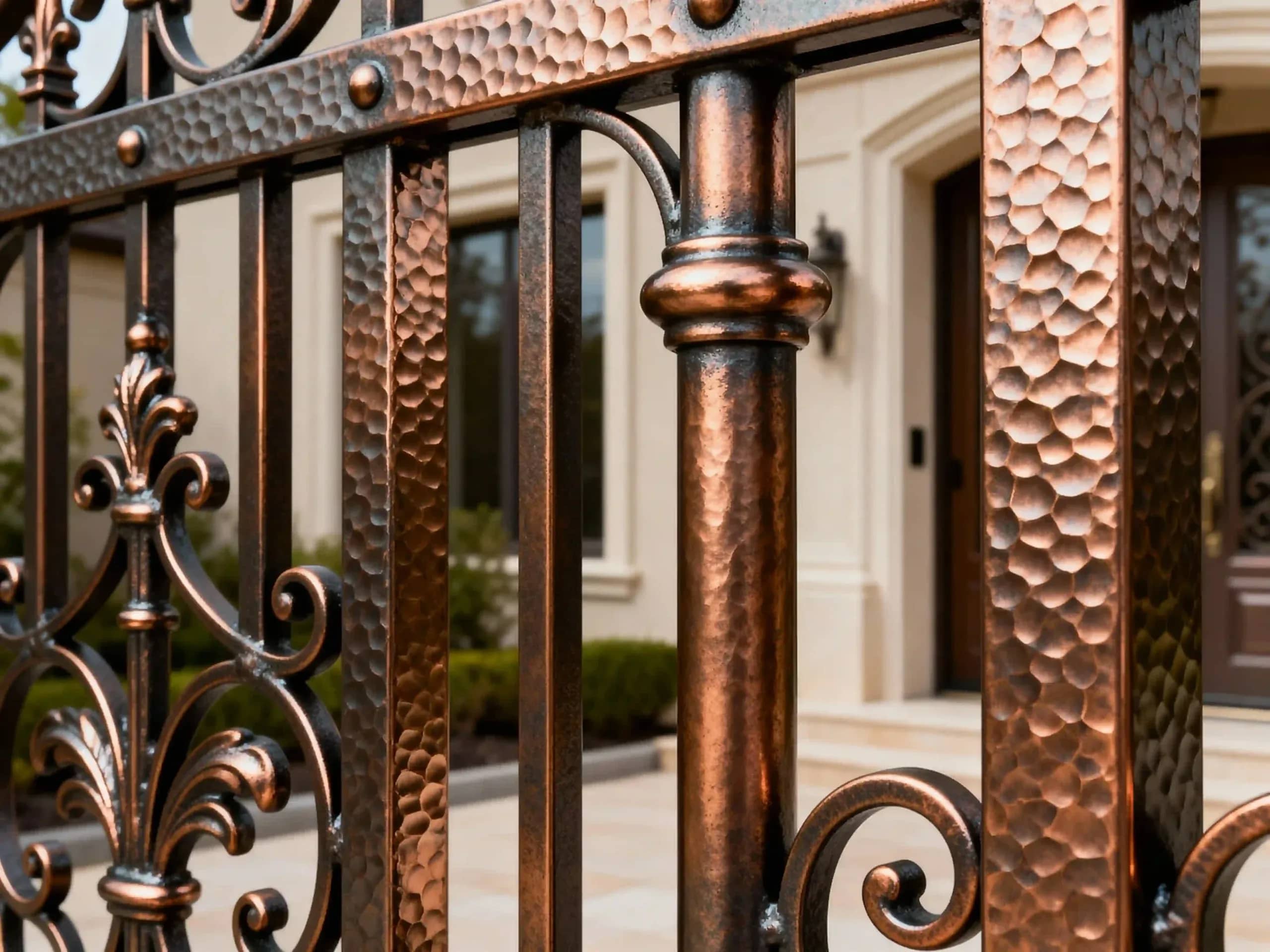
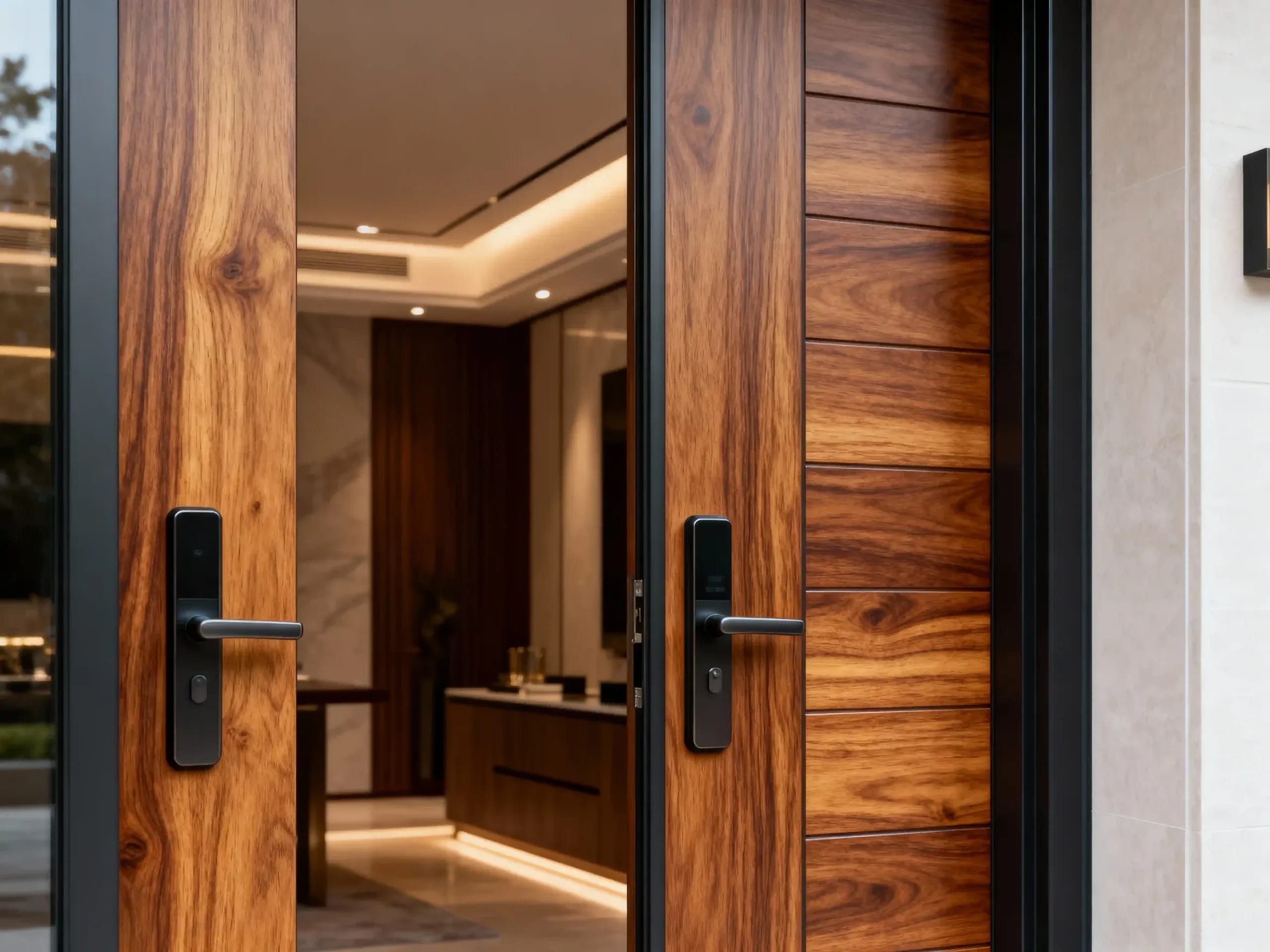
The gallery illustrates a wood-effect appearance; it is not a verified DM766-PA test panel or a documented customer installation. Use the approved physical sample, rather than the screen image, as the purchase reference.
Questions to resolve before specifying the finish
Is this powder coating for actual wood or MDF?
No wood or MDF application is established by this DM766-PA TDS. The documented substrates are pretreated metals. If your project uses wood or another heat-sensitive material, do not assume this metal-coating system or its cure schedule is suitable.
Is wood-grain transfer the same as powder-on-powder decoration?
This page describes a cured powder basecoat followed by compatible sublimation-transfer film or paper. It does not specify a powder-on-powder decorative process. Name the process when requesting a match so that powder grades and processing instructions are not treated as interchangeable.
Does the outdoor grade provide a fixed service-life guarantee?
No fixed outdoor service life is stated here. DM766-PA is described as an outdoor pure-polyester grade in its TDS, but the finished result also depends on the pretreatment, transfer material, processing, exposure, and project requirements. Confirm the required evidence and written specification for your application.
What should I send for a sample or quotation?
Send the metal and pretreatment, part drawing or dimensions, indoor or outdoor location, grain reference and gloss target, powder and transfer equipment, estimated purchase quantity, destination, and required delivery date. Ask for the current TDS and SDS, a compatible transfer-material recommendation, and a representative-part sample plan. Quantity, pricing, and timing must be confirmed for the request.
Request a wood-grain system sample or send your specification for a quotation.
| Feature | Specification |
|---|---|
| Documented base powder | DM766-PA; manufacturer TDS Rev.20260622, issued June 22, 2026 |
| Chemistry and process | Outdoor pure-polyester basecoat for compatible wood-grain sublimation transfer |
| Base color and gloss | Beeswax Yellow; 80–85 GU before qualifying the complete transferred finish |
| Substrate | Pretreated steel, aluminum, and galvanized steel; actual pretreatment and part require validation |
| Application method | Corona or tribo electrostatic powder spray; compatible transfer film or paper applied as a separate stage |
| Basecoat cure schedule | 180°C / 15 min or 200°C / 10 min at object metal temperature; dwell starts when the metal reaches temperature |
| Transfer settings | Not specified by this TDS; qualify film/paper, time, temperature, and contact conditions separately |
| Reported test-panel condition | Oil-removed and phosphated 0.8 mm steel; cured film 60–80 μm. Typical panel values, not a universal part specification |
| Approval and documentation | Keep the current TDS and SDS. On the signed, dated profile sample, record its ID, DM766-PA lot, film/paper supplier, pattern code and lot, and profile section. Use the same ID on the basecoat cure record, transfer run record and acceptance results. |
| Sample and quotation | Send the metal profile and pretreatment, transfer film or paper reference, target grain direction and gloss, order quantity and destination. Approve the transferred finish on a representative part. |
| TDS steel-panel weathering | Rev.20260622 reports ΔE* < 1.5 after 1,000 h of ASTM G155 xenon-arc exposure on 0.8 mm degreased, phosphated steel with 60–80 μm of cured film. The TDS gives no transfer status or film/paper code for that panel. |
Technical data for product qualification
Use these manufacturer TDS documents as a starting point for chemistry, finish, cure and test review. Confirm the exact formulation, revision and project acceptance criteria before approval or bulk ordering.
Browse the complete technical resource library