
October's factory news puts repeatability in focus
In an official update dated October 9, 2026, IFS Coatings announced the acquisition of a 100,000-square-foot facility in Elkhart, Indiana. The company describes plans to expand powder production and metallic bonding capabilities alongside its existing manufacturing footprint. The announcement does not give a production start date.
For buyers placing repeat orders, factory investment raises a useful operational question: can each delivery be connected to the specification and sample that the customer approved? Additional capacity and consistent finished parts are different things. Batch identification helps purchasing, production and quality teams investigate a discrepancy without guessing which material was used.
Give each shipment an identity before it ships
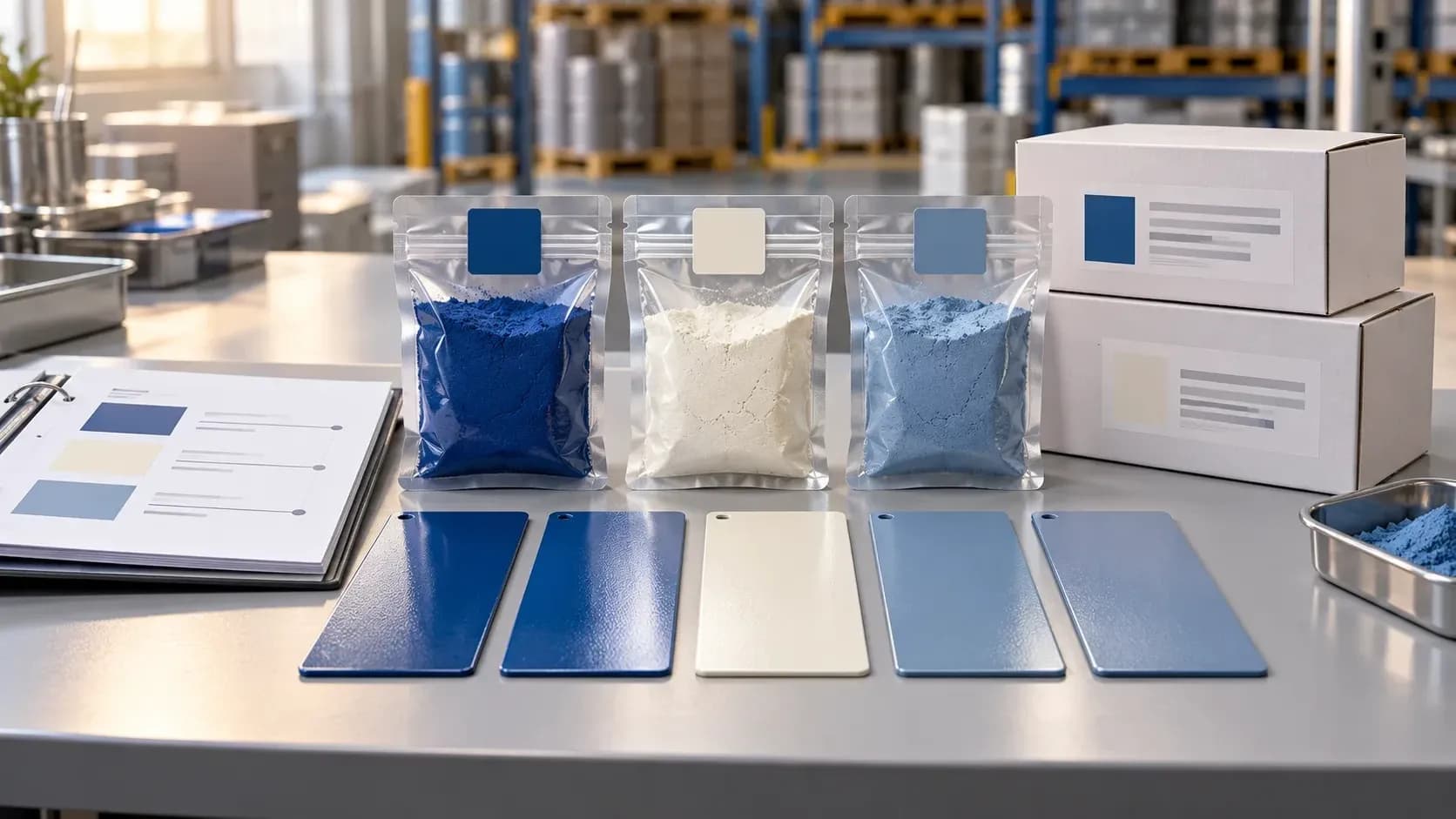
Begin with the exact product, rather than a color name alone. Two powders sharing a RAL reference can have different chemistry, gloss, texture, curing requirements or intended exposure. Record the agreed product code and the revision of the relevant technical data sheet. Keep the approved panel identified separately from a screen image or printed color card.
For each shipment, ask the supplier to confirm which records can be provided and agree a practical minimum:
- Product code, color, gloss and surface finish.
- Production batch identification and quantity per batch.
- Manufacturing date and stated storage or shelf-life conditions.
- Purchase order, carton or pallet references and packing list.
- Agreed inspection results and retained-sample arrangements.
Link the paperwork to the physical labels. If an order contains more than one batch, the receiving team should be able to identify the split before production begins.
Compare batches under the same coating conditions
A difference between two finished panels does not, by itself, establish a powder defect. Different substrate preparation, film thickness, application settings or curing histories can change the result. A useful comparison keeps these conditions documented and comparable.
Prepare a panel from the received batch and compare it with the approved reference using the agreed viewing conditions. Record the substrate, pretreatment, coating thickness and actual part-temperature curing profile. Where the project specifies color, gloss, adhesion or other checks, record the method and acceptance limit alongside the result. A pass without its test conditions is difficult to reproduce.
Keep a clearly identified powder sample and coated reference panel when the supplier and buyer agree that this is appropriate. Agree sample quantities, storage conditions and retention periods before the order; do not assume indefinite retention.
Protect batch identity through packaging and storage
Traceability continues after dispatch. Record damaged cartons, broken liners or moisture exposure when goods arrive, and keep affected material identifiable while its suitability is reviewed. When splitting a carton between production areas, transfer its product and batch identification to the receiving container. An unlabelled hopper can break an otherwise complete record.
The IFS job-shop organization guide emphasizes cool, dry powder storage and records that include product codes and batch information. Apply the actual product's storage instructions rather than a universal temperature or shelf-life assumption. Close opened packaging as instructed and manage stock against its stated usable period.
Record any mixing of batches or reclaimed powder permitted by the agreed application procedure. Avoid undocumented mixing: it makes later comparisons and investigations harder.
Plan a DAMEI review around your next repeat order
When discussing a DAMEI order, provide the previous product code, approved panel reference, application and expected quantity. For an indoor cabinet or equipment project, start with the indoor epoxy-polyester powder coating. For exposed metalwork, review the outdoor pure polyester powder coating against the intended environment and project requirements. Confirm the exact grade rather than treating a product family as one universal specification.
Use the real-part coating trial guide to organize the discussion. Ask which batch records, sample checks, packaging details and project documents are available for the proposed order; availability should be confirmed before purchase.
Contact DAMEI with the reference panel, destination and required delivery schedule. A documented comparison and a clear receiving procedure give repeat orders a practical foundation for consistency, from the first carton to the last coated part.