

A metallic finish approved on a design panel needs a documented production process before it becomes a reliable order specification. Pigment orientation, film build, part shape and viewing conditions can change the impression of the same powder. Define an appearance the line can reproduce and inspectors can assess consistently.
DAMEI supplies metallic and decorative powders within its product range. Start with a physical reference and the intended application, then agree a sample and line-trial plan with the powder supplier and coating applicator.
Agree a physical appearance reference
Keep an approved panel or representative part that identifies the intended color, sparkle, gloss and texture. Define which faces matter, the viewing distance, lighting and observation angles. For a metallic surface, inspecting only from directly in front can miss differences visible when components are assembled.
IGP’s technical information on color tolerances explains the strong influence of light and viewing angle on effect coatings and the importance of visual assessment. Instrument readings can support an agreed inspection method; they do not describe every aspect of metallic appearance. Define acceptable boundary samples under the actual production conditions.
Record the application and cure window
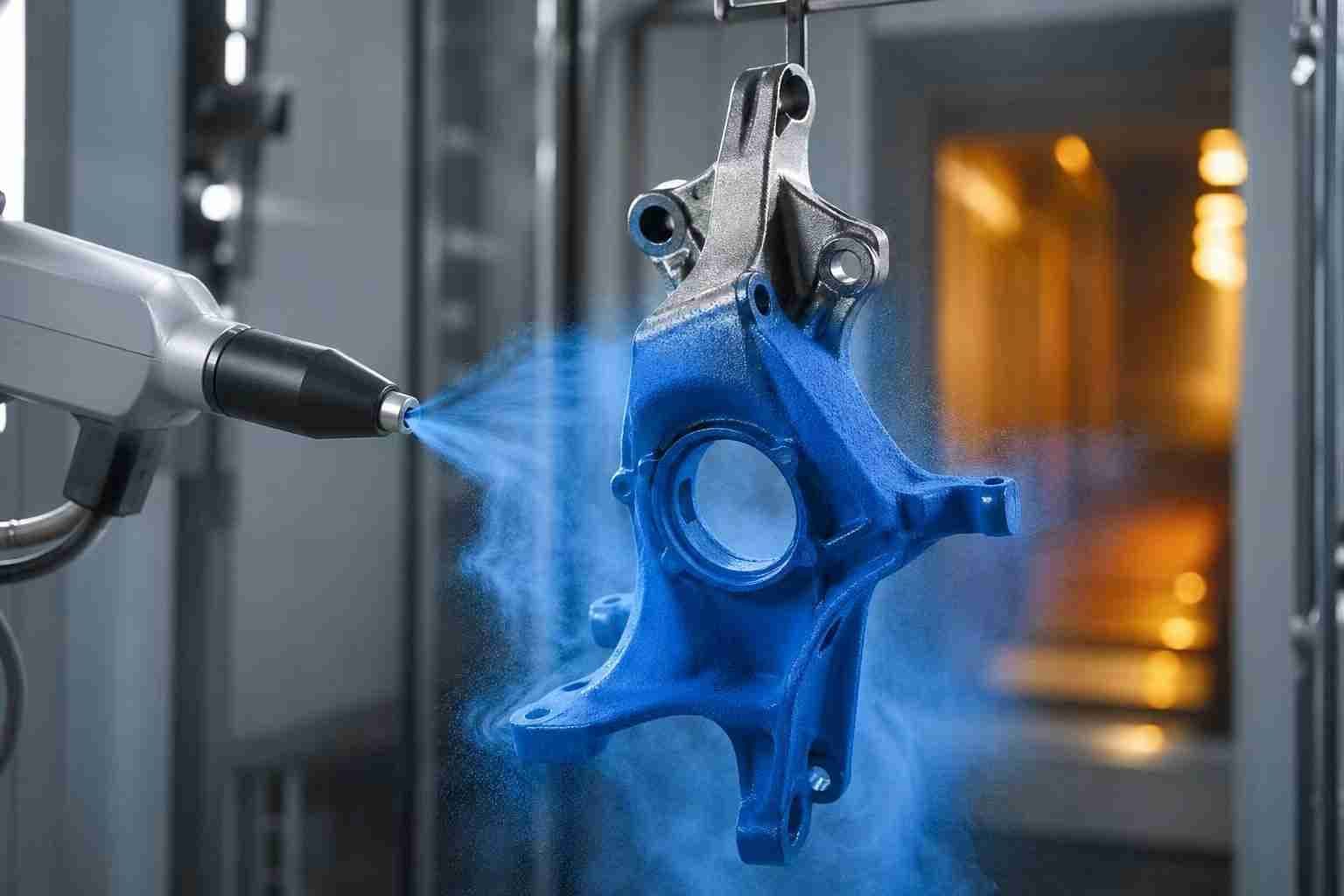
Run the trial on representative metal and pretreatment. Include the part geometry, hanging orientation and load arrangement that production will use. Record gun type, nozzle, electrical settings, powder delivery, spray distance, grounding, film thickness, line speed and the measured part-temperature profile.
Use the current product technical data sheet to establish cure conditions. DAMEI’s CK5022-PD TDS documents a pure-polyester TGIC powder for decorative outdoor metallic texture. Its application and part-metal cure guidance concern that named formulation; review other metallic grades separately. Record a validated operating range rather than copying settings from a different powder or line. When manual work is needed, include its position in the application sequence. Keep the trial parts and process record together so a later appearance change can be investigated against the same baseline.
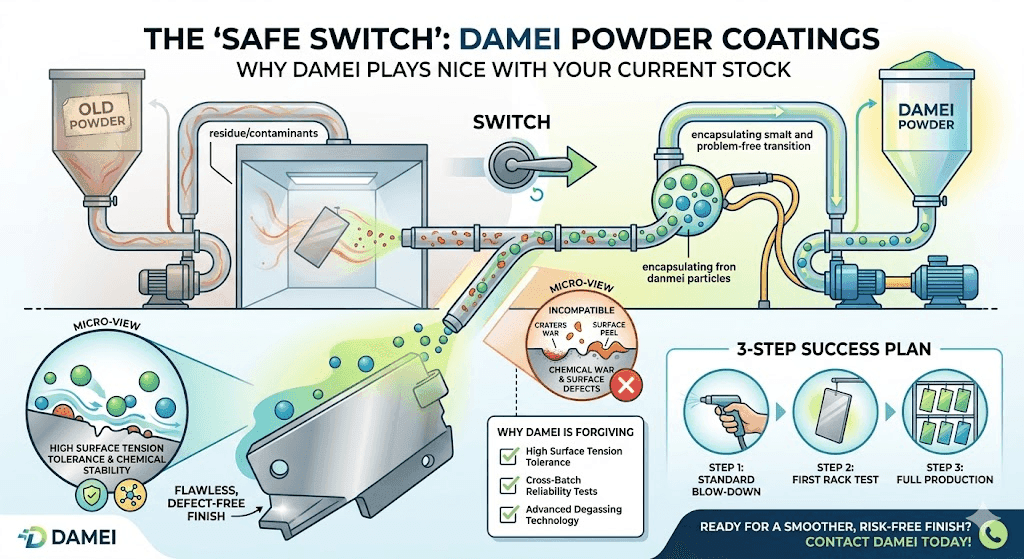
Qualify reclaimed powder on the intended line
Ask whether reclaim is permitted for the selected grade and process. IGP’s metallic-effect processing guideline describes effect-pigment accumulation with filter recovery and losses with cyclone separation. It also distinguishes product-specific reclaim conditions. Those settings belong to the named IGP products and cannot establish a universal DAMEI reclaim percentage.
Agree the candidate virgin-to-reclaimed mixture with the supplier and applicator, then compare its appearance with the approved reference over repeated production cycles. Identify the recovery equipment and mixing practice in the record. If appearance drifts, hold affected parts for review before changing the approved mixture or process.
Plan batches and adjacent components together
Tell the supplier which parts will sit next to one another and estimate the powder needed for the complete job, including an agreed reserve. Plan batch continuity, equipment and settings together. If a new batch or coating line becomes necessary, compare representative parts before releasing the change.
Inspect components in their intended arrangement as well as individually. A flat approval panel helps select the finish; assembled faces reveal differences related to orientation, geometry and production conditions. Retain the batch identity and an accepted production sample for subsequent orders.
Complete the approval handover
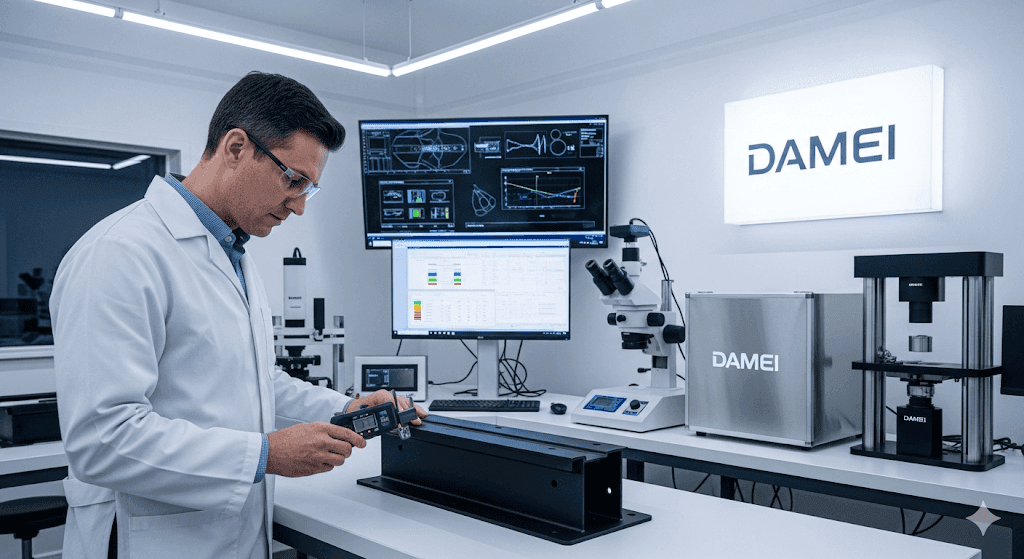
Use DAMEI’s powder coating quality-control guide to discuss the relevant appearance, film, cure and performance checks. Confirm the selected formulation’s suitability for the service environment and agree test methods and acceptance criteria for the actual project.
The handover should identify the approved reference, powder and batch, process window, reclaim practice, inspection conditions and responsibility for authorizing changes. Contact DAMEI with your physical finish reference, metal, pretreatment, part drawing, application equipment, exposure, quantity and destination market to request a candidate powder and sample plan.
Cover illustration: a decorative finish concept, not a documented production case.