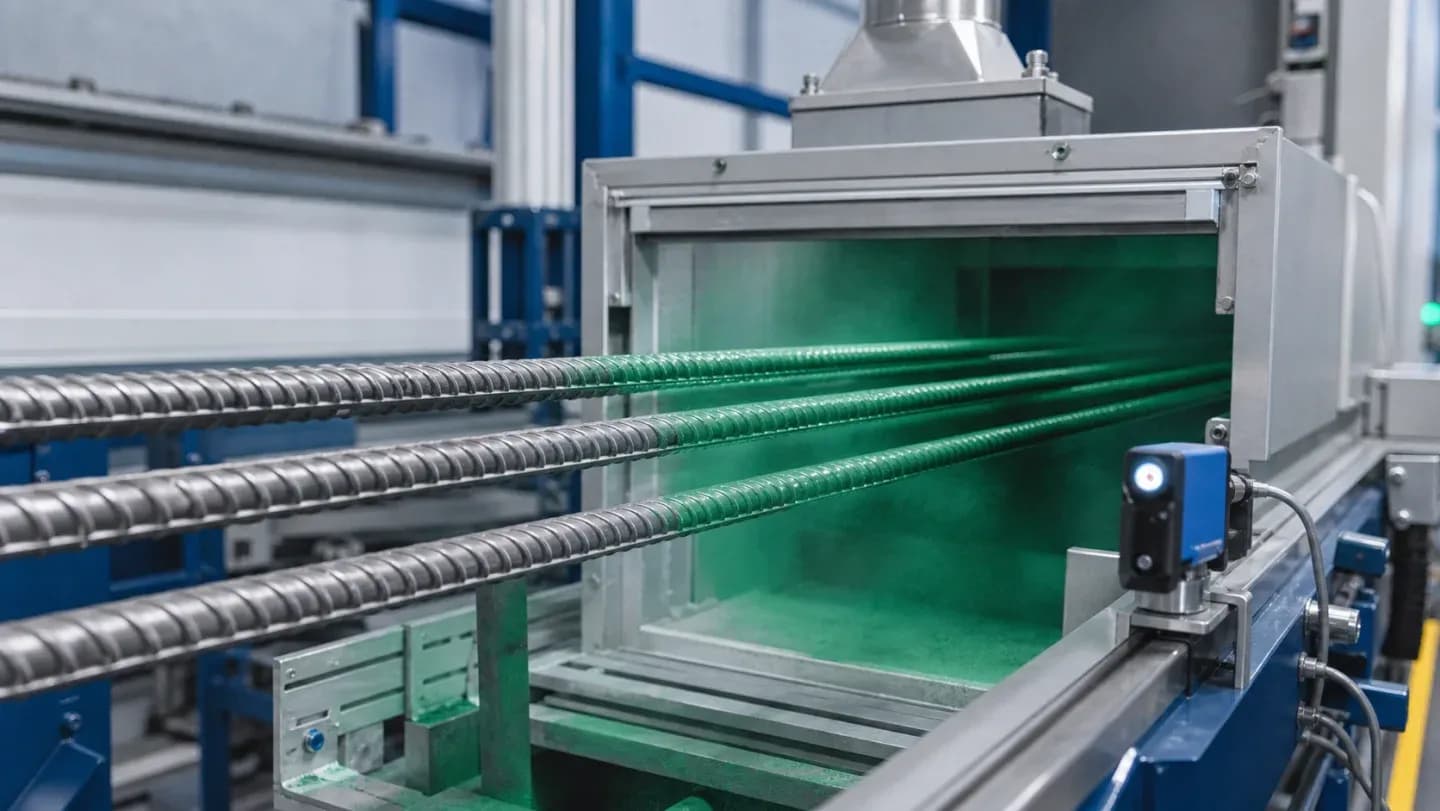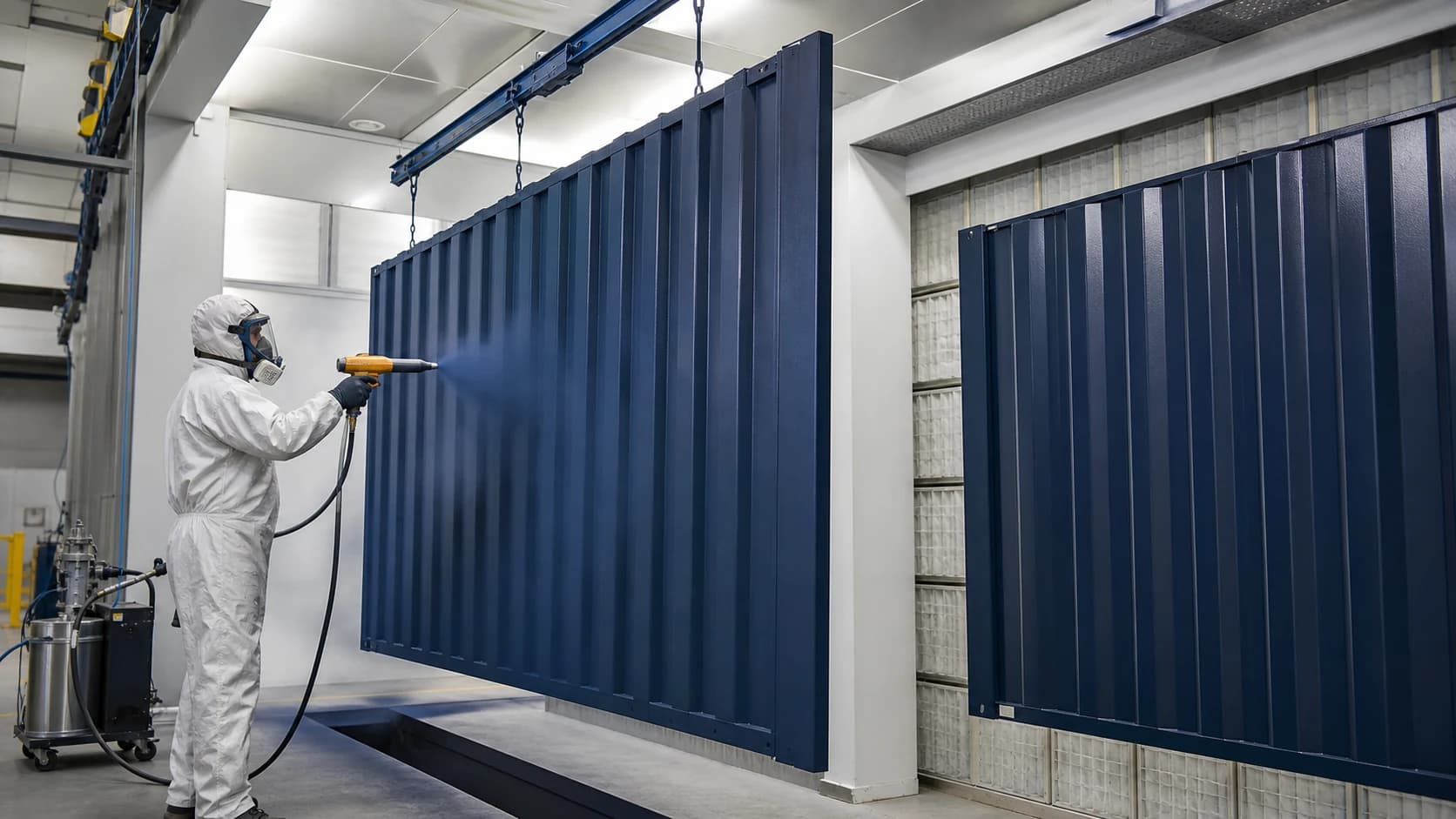


Powder coating can provide electrical insulation, corrosion protection or thermal-management support on selected electric-vehicle battery components. It is not one universal coating for an entire battery pack. The correct specification starts with the component, failure mode, substrate, geometry and OEM test plan, then qualifies one formulation on production-representative parts.
This guide helps battery-pack designers, component manufacturers, coaters and procurement teams prepare an evidence-based request for quotation. DAMEI supplies powder-coating material; the battery-system owner, applicator and qualified laboratory retain responsibility for electrical design, process validation and final acceptance.
Start with the battery component and its function
A cylindrical or prismatic cell can require electrolyte resistance and consistent edge coverage. A copper or aluminum busbar can require electrical insulation without unacceptable loss of dimensional control. A cooling plate may combine dielectric and heat-transfer requirements. A pack enclosure or cover may prioritize corrosion, impact, chemical exposure and external weathering. These are different design problems.
AkzoNobel identifies separate Resicoat EV families for cells, busbars, cooling parts and pack housings, while PPG describes customized dielectric property sets for different battery-pack components. Those supplier portfolios support a component-specific approach; they do not make another supplier's published values transferable to DAMEI material.
Record the exact part name, electrical role, substrate and alloy, pretreatment, edge radius, joints, masking, grounding points, mating surfaces and service exposure before selecting chemistry.
Translate system risk into measurable coating requirements
Separate the required functions instead of asking for a generic “battery-safe” powder:
- electrical insulation: dielectric strength, breakdown voltage, insulation resistance, tracking resistance or partial-discharge behavior as applicable;
- thermal behavior: conductivity, emissivity, temperature class or thermal cycling only where the component design requires it;
- environmental protection: humidity, water immersion, coolant, electrolyte, cleaning chemicals, salt or road contamination;
- mechanical integrity: adhesion, impact, flexibility, abrasion, edge coverage and damage after assembly;
- fire behavior: only the exact flammability method and material/system listing required by the OEM;
- manufacturing controls: film build, cure window, masking, rework, inspection and traceability.
A pass in one category does not prove another. For example, a flammability classification does not establish dielectric breakdown performance, and a flat-panel salt test does not prove insulation continuity on a formed busbar edge.
Choose chemistry by evidence, not by the word epoxy
Epoxy-based dielectric powders are common because formulators can tune adhesion, electrical insulation and chemical resistance. Hybrid or other systems may be relevant for different exposure and process windows. The resin family alone does not establish a temperature class, flame rating, dielectric strength or service life. Pigment, filler, cure, film thickness, substrate preparation and test specimen all affect the result.
Request the exact technical data sheet, safety data sheet, product revision and available test report for the proposed formulation. Confirm whether each value is typical, minimum, qualification-only or part of a third-party listing. If the service includes sunlight or an exterior cosmetic surface, review weathering separately rather than assuming a dielectric epoxy is an exterior finish.
Define dielectric evidence with method and specimen
A useful electrical requirement names the method, electrode arrangement, specimen, conditioning, film thickness, voltage ramp or dwell, failure definition and acceptance authority. IEC 60243-1 is one method used for short-time electric-strength testing of solid insulating materials; IEC 60112 addresses comparative tracking index. Supplier literature also references ASTM D149, ASTM D150, IEC 60093 and product-specific UL listings. These methods answer different questions.
Do not copy a competitor's kV/mm, resistance or tracking value into an RFQ without its specimen and method. A high material value on a prepared coupon does not automatically predict the breakdown voltage of a finished component with edges, pores, fixtures or assembly damage. Where the requirement is breakdown voltage across a finished part, specify that part-level test directly.
Control edge coverage and complex geometry
Electrical failure often begins at thin edges, holes, welds, burrs or masked transitions. Electrostatic wrap is useful but does not prove uniform coverage on every geometry. Faraday-cage regions, sharp radii, heavy film on open faces and poor grounding can create a misleading average thickness while critical locations remain underprotected.
Define measurement locations and minimum local coverage, not only an overall target. Review deburring, edge radius, hanging orientation, gun position, voltage/current settings and powder flow. Use sectioning, microscopy, holiday detection or agreed electrical tests where ordinary thickness gauges cannot verify the critical feature. Our film-thickness guide explains how substrate and method affect measurement.
Treat pretreatment and cure as part of the insulation system
Oil, oxide, laser scale, fingerprints, conversion-coating variation or retained rinse contamination can impair adhesion and electrical continuity. The pretreatment must match the alloy, fabrication state and chemical exposure. DAMEI does not supply pretreatment chemistry or operate the customer's coating line, so the applicator should validate cleaning and conversion with its process suppliers.
Record actual part-metal temperature rather than oven-air setpoint. Thick castings, thin busbars and assembled cooling plates heat differently. Compare a multi-point production profile with the exact powder data sheet and retain the trace. See the powder cure-schedule guide and pretreatment specification guide for the evidence to include.
Build a production-representative qualification matrix
Start with representative parts from normal fabrication, not only ideal laboratory panels. Include the most difficult alloy, thickness, edge, weld, recess, contact point and masking transition. A practical qualification matrix can include:
- incoming substrate and cleanliness evidence;
- pretreatment controls and water-quality records;
- powder identity, lot, storage and reclaim rules;
- local and average film-thickness mapping;
- recorded cure profile on the slowest and fastest heating locations;
- adhesion and damage inspection before and after assembly;
- electrical tests on agreed coupons and finished parts;
- chemical, humidity, thermal and corrosion exposures required by the OEM;
- reinspection after bending, fastening, sealing or transport simulation;
- documented acceptance, deviation and rework rules.
The powder-coating quality-control test guide helps keep each method tied to the property it actually supports.
Separate product qualification from line capability
A supplier can provide formulation data and coated samples, but the production line determines grounding, deposition, cure, contamination control and repeatability. Approve both: first the powder on a controlled test plan, then the installed process across a defined production window.
Use a pilot lot large enough to expose normal rack positions, restart conditions, reclaim behavior and part variation. Establish control limits for parameters that correlate with the accepted result. Do not use “every-part inspection” as a substitute for a capable process; name which characteristics are checked on every part and which are sampled.
Compare suppliers without copying branded claims
Official AkzoNobel and PPG materials show that established suppliers offer specialized EV dielectric systems and component-specific data. They are useful benchmarks for the questions a buyer should ask, not evidence that an untested alternative is equivalent. DAMEI does not sell AkzoNobel Resicoat, Interpon or PPG Envirocron products.
When evaluating DAMEI or another alternative, provide the incumbent data sheet, component drawing, failure mode, required test methods and acceptance values. Compare like-for-like samples on the same substrate, preparation, thickness, cure and laboratory procedure. Use the supplier qualification checklist and supplier-change guide to plan equivalence work without assuming interchangeability.
What to include in an EV coating RFQ
Send the component and alloy, annual volume, drawings, edge and masking details, current pretreatment and line limits, target film locations, electrical and environmental methods, acceptance values, documentation needs, packaging, destination and planned approval stages. Identify any restricted substances or OEM specifications that the exact material must meet.
DAMEI can review whether an epoxy or another powder family is a credible starting point, prepare a sample and align available documentation. A recommendation remains provisional until the purchaser approves the coated part and production process. Contact DAMEI with the specification rather than relying on a generic product name.
Frequently asked questions
Is every epoxy powder an EV dielectric coating?
No. Electrical performance depends on the complete formulation, thickness, cure, specimen and method. Require evidence for the exact grade.
Is one film-thickness number suitable for cells, busbars and enclosures?
No. The electrical path, geometry, edge coverage, assembly tolerances and test method differ. Set component-specific local and average limits.
Does UL 94 V-0 prove electrical insulation?
No. It is a flammability classification under defined conditions. Electrical strength, tracking and insulation resistance require their own evidence.
Can a supplier establish battery safety from a powder data sheet?
No. Battery safety is a system property. The coating supplier supports defined material functions; the OEM must validate the finished component and pack.