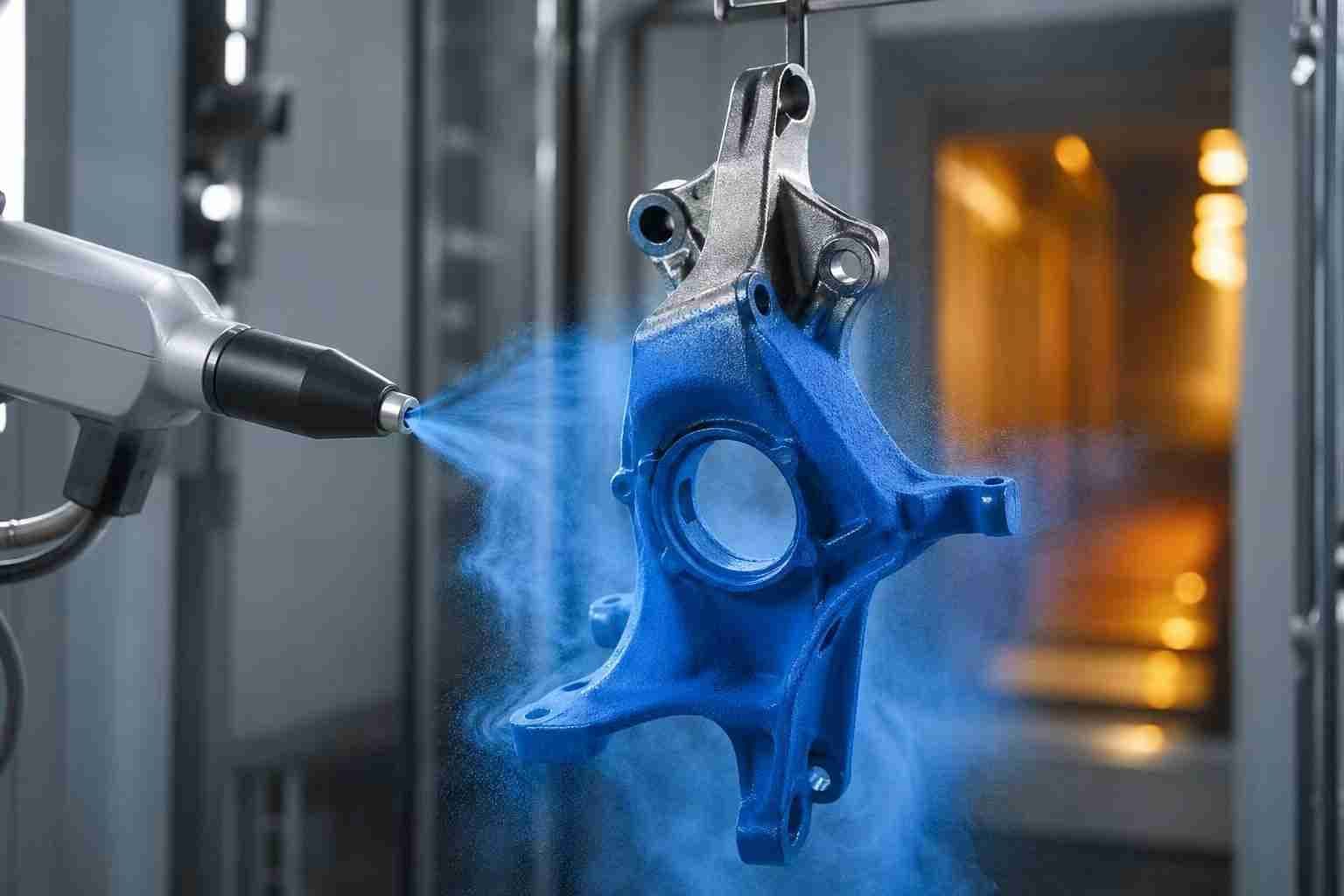

A stable powder coating process is built around the selected coating, the actual substrate, the part geometry and the customer's acceptance criteria. There is no universal gun setting, spray distance or reclaim blend for every line. Manufacturers get more useful results when they define a process window, verify it on representative parts and record the evidence needed to release production.
This guide provides a practical framework for industrial applicators and sourcing teams. It complements the current technical data sheet, safety data sheet, equipment instructions, pretreatment supplier guidance and applicable regulations.
Start with the finished-part requirement
Translate the drawing and service environment into measurable requirements before setting the booth or oven. Confirm substrate and grade, part mass, thickness variation, welds, sharp edges, recesses, masking zones, handling points and appearance-critical surfaces. Document color, gloss, texture, film-thickness range, adhesion method, cure evidence and any required corrosion or weathering qualification.
The powder chemistry must suit the intended exposure. Indoor decorative parts, outdoor architectural components and chemically exposed equipment do not automatically use the same resin system. A buyer comparing a regional formulation with AkzoNobel Interpon powder should compare technical documents, approved colors, substrate preparation, test methods and acceptance limits—not the brand name alone. Our Interpon powder coating alternative guide explains this specification-led process. DAMEI is an independent manufacturer and is not affiliated with AkzoNobel.
Qualify on representative production parts whenever geometry, metal condition or line conditions can affect the result. A flat panel can help compare variables, but it may not reveal Faraday-cage behavior, heavy-section cure response or outgassing from the real component.
Control cleaning and pretreatment
Powder cannot compensate for oil, oxide, scale, soluble salts or poorly controlled pretreatment. Begin with a documented incoming-metal check and a cleaning sequence appropriate to the substrate and contamination. Keep bath condition, rinse quality, water quality, contact time and drying under control according to the pretreatment supplier's instructions.
A useful production record identifies the part family, pretreatment readings, operator, powder lot, line settings and release results. When adhesion changes, this history helps separate a metal-preparation issue from an application or cure issue. Do not assume visually clean metal is ready to coat. Verification should reflect the chosen pretreatment system and customer specification. See our powder coating pretreatment guide for the full control sequence.
Establish grounding and spray settings on real parts
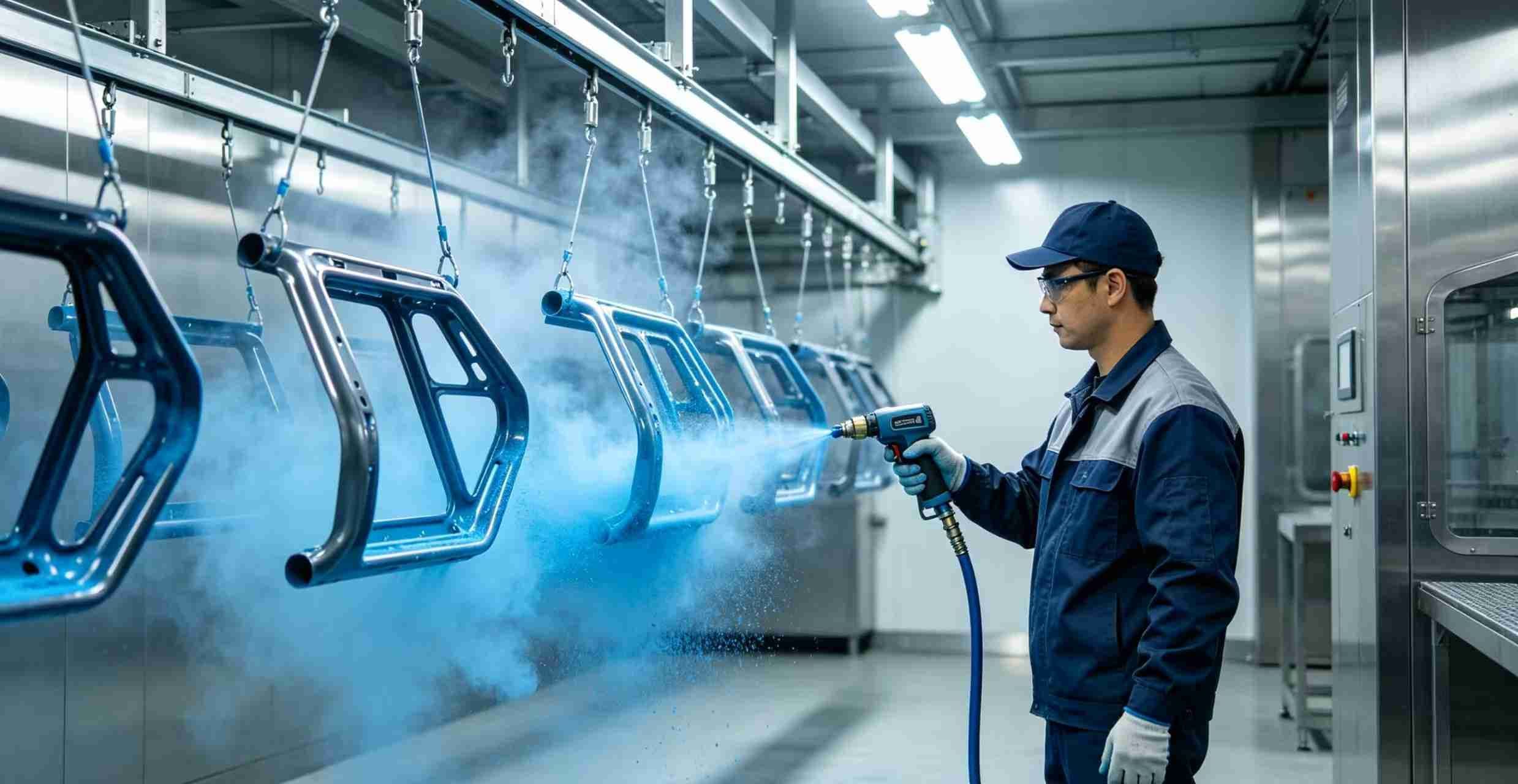
Electrostatic application depends on a complete electrical path through the conveyor, hooks, racks and part. Coating buildup at contact points can increase resistance, so contact surfaces need a planned cleaning and inspection routine. Grounding should be checked with suitable instruments against the equipment manufacturer's requirements and applicable safety rules.
Set gun voltage, current limits, powder output, atomizing air, pattern air and conveyor speed as one coordinated process. High output is not automatically better. Excessive charging or powder flow can worsen back-ionization, texture and penetration into recesses. Lower settings may help some difficult geometries, but changes should be validated on the actual part rather than copied from a generic chart.
Use controlled trials to identify a repeatable operating window. Record booth condition, hook condition, gun program, part presentation and ambient conditions that can influence application. Automatic and manual touch-up zones should follow the same documented acceptance criteria.
Manage film build and reclaimed powder
Measure dry film thickness at defined locations representing flat areas, edges, recesses and other critical surfaces. The target range comes from supplier data, customer requirements and qualification results. A single reading cannot describe a complex part, so the plan should state the instrument, calibration check, locations and sampling method. ASTM D7091 describes practices for nondestructive dry-film-thickness measurement on ferrous and nonferrous metals.
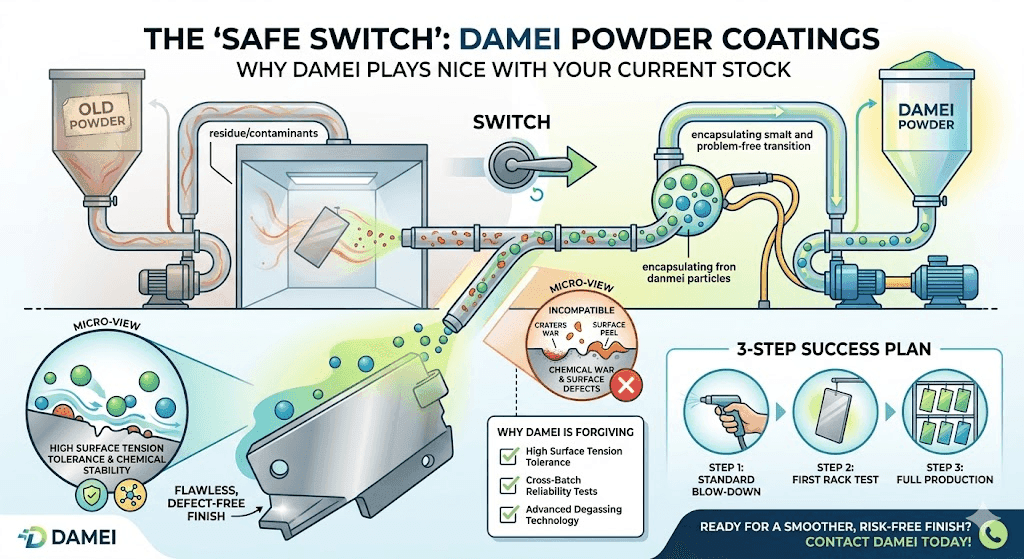
Reclaimed powder is a process variable, not a universal recipe. The acceptable blend depends on powder, color, finish, contamination controls, booth design and appearance requirements. Keep virgin and reclaimed material identified, screen it as required, prevent cross-contamination and verify the blend through finished-part results. Follow the powder and equipment suppliers' written guidance when setting the reclaim policy.
Storage and handling also matter. Keep powder sealed, identified and within the supplier's stated conditions. Allow material and parts to reach suitable operating conditions when condensation is possible. Use lot traceability so an abnormal result can be investigated without mixing unrelated production.
Verify cure from part-metal evidence
Oven air temperature alone does not establish coating cure. The supplier's cure schedule normally refers to metal temperature for a stated interval, and different part masses can heat at different rates. Build an oven profile with representative parts and sensors at meaningful locations. Recheck it when load density, conveyor speed, part mass, racking or oven balance changes.
Our powder coating cure schedule guide explains the difference between oven settings and part-metal temperature. Where the specification calls for additional cure verification, select a method appropriate to the coating and documented acceptance criteria. ASTM D5402 covers solvent-rub evaluation of organic coatings, but its use and pass criteria must be agreed for the specific system.
Avoid treating extra heat as a default correction. Excessive thermal exposure can change color, gloss or mechanical behavior, while insufficient cure can reduce performance. Diagnose the profile and coating requirements before changing the production window.
Qualify, monitor and release the process
A sound control plan connects each critical variable to a check, frequency, owner and reaction plan. Typical evidence includes incoming-metal condition, pretreatment readings, grounding, powder identity, gun program, film thickness, oven profile, appearance and specified performance tests.
Use recognized methods where they fit the requirement. ASTM D3359 covers tape testing for adhesion, while ASTM D3451-24 provides guidance for testing powder coatings. The method, substrate, preparation, conditioning and acceptance limit must be stated; a method number alone is not a product specification.
When a result falls outside the approved window, hold affected material, identify the last accepted check and investigate one variable group at a time. Release only against documented customer criteria. Our powder coating quality-control tests guide can help structure the inspection plan.
Information to send a powder coating manufacturer
A useful request includes substrate, part use, indoor or outdoor exposure, color reference, gloss or texture, expected film range, pretreatment, application line, cure constraints, required standards, demand and sample approval process. Photos and drawings help identify recesses, edges, masking and appearance-critical zones.
DAMEI can review this information and propose a product-development and sampling path. Start with our China powder coating manufacturer guide or contact the technical team with the application details.
Frequently asked questions
What gun setting should I use for powder coating?
Use the equipment and powder suppliers' starting guidance, then establish a verified window on representative parts. Geometry, grounding, powder output, current limiting, gun movement and booth conditions interact, so one universal setting is not reliable.
Can reclaimed powder always be mixed with virgin powder?
Only when the selected powder, finish, booth and quality plan permit it. Define identification, screening, contamination control, blend control and finished-part verification for that line.
How do I know whether powder coating is fully cured?
First confirm the documented part-metal profile against the powder supplier's cure window. Add an agreed coating test when the specification requires it; do not infer cure from oven air temperature or appearance alone.