
What Low-Temperature-Cure Powder Coating Actually Means
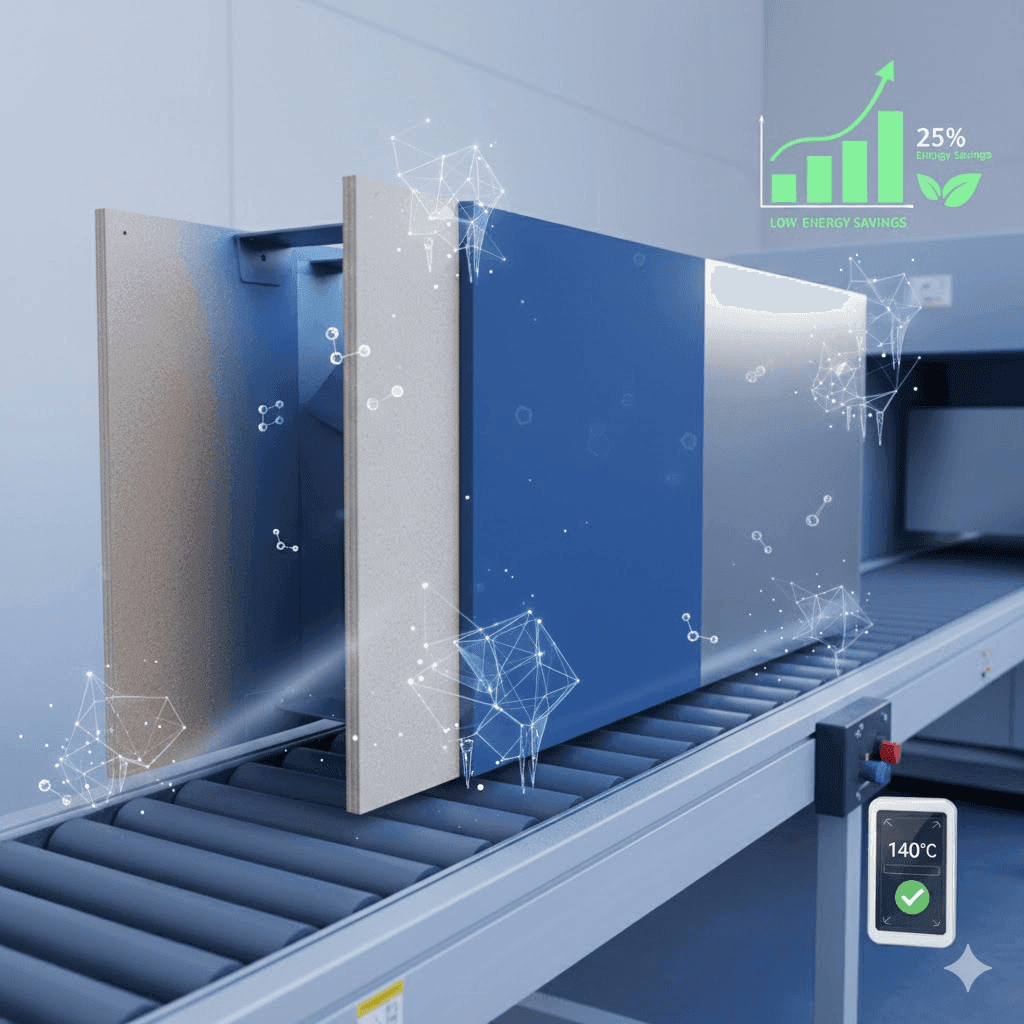
Low-temperature-cure powder coating is a thermosetting formulation designed to reach its specified cure at a lower metal temperature, a shorter dwell, or a defined combination of both compared with a selected baseline powder. “Low cure” is not one universal temperature and does not mean that every color, gloss, chemistry, substrate, or part can use the same oven setting.
The current product technical data sheet is the controlling starting point. It should state the cure window as workpiece metal temperature and time. AkzoNobel's energy-savings process guide likewise tells applicators to evaluate the minimum curing temperature and time from the applicable technical data sheet before adapting an oven.
Use DAMEI's powder coating cure-schedule guide before comparing products or changing a line.
Start With a Measured Baseline, Not a Savings Claim
Before selecting a low-cure powder, record the existing product, substrate, pretreatment, part mix, oven type, conveyor speed, air setpoint, actual part-metal profile, reject causes, and energy use. A claimed temperature reduction cannot predict utility savings by itself because fuel type, oven losses, exhaust, line loading, part mass, startup time, and production schedule all affect the result.
Define the business objective clearly. It may be to:
- reduce the metal-temperature requirement for a heat-sensitive assembly;
- shorten dwell while preserving the required cure;
- increase throughput within an existing oven;
- reduce peak oven setting or startup burden;
- widen process capability for mixed part masses;
- support a measured energy or emissions project.
Choose one baseline and compare equal output, equal accepted quality, and the same measurement boundary. Report actual metered consumption per accepted production unit or another agreed functional unit rather than applying a universal percentage.
Match the Powder to the Substrate and End Use
Low-cure products exist in different chemistries and performance classes. A schedule alone cannot establish exterior durability, corrosion resistance, chemical resistance, flexibility, color stability, food-contact suitability, architectural approval, or compatibility with a primer.
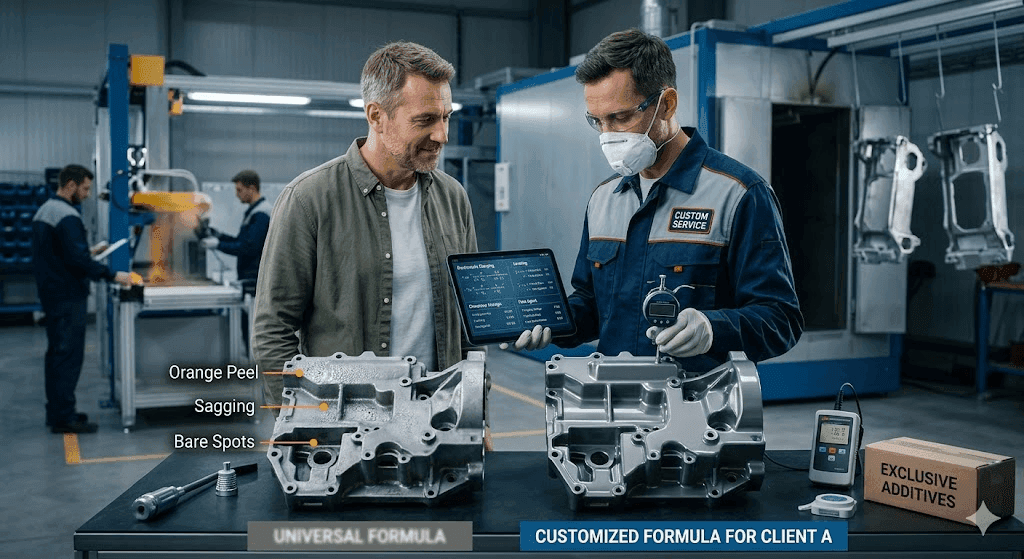
Send the powder supplier the substrate, pretreatment, part geometry, maximum heat tolerance, exposure, color, gloss, texture, film-thickness range, test standards, and application equipment. For outdoor work, specify the weathering requirement. For an interior functional part, identify chemicals, heat, wear, and assembly loads. For a primer-and-topcoat system, qualify both layers and the combined cure.
Official product information illustrates why the exact formulation matters. AkzoNobel's Interpon D Low-E and Sherwin-Williams' Powdura ECO architectural range publish product-specific low-bake schedules and performance positions. These references do not establish equivalence to a DAMEI product; use the current data sheet for the product actually purchased.
Profile Part-Metal Temperature Across the Load
Oven-air temperature is only an input. The relevant cure evidence is the temperature history of the coated workpiece. Thin sheet, heavy castings, welded frames, dense racks, and mixed loads can reach the target at different times.
Run a profile with probes on representative cold and hot locations. Include the slowest-heating section, a light section that may overheat, leading and trailing rack positions, and any area shielded from airflow or infrared energy. Separate:
- bring-up time before the metal enters the cure window;
- dwell time inside the approved window;
- total oven residence time;
- peak metal temperature and possible overbake exposure.
If the line coats several part families, create a documented profile for each meaningful thermal class. A low-cure product can only create a reliable process benefit when every relevant part achieves the specified window without introducing unacceptable overbake, color, gloss, or mechanical changes.
Check Application Behavior Before Changing Line Speed
A different resin and crosslinker package may affect storage stability, fluidization, charging, deposition, edge coverage, flow, appearance, and reclaim behavior. Keep the first trial controlled: use fresh material, known clean equipment, stable booth conditions, and representative parts.
Record powder condition, sieve practice, virgin-to-reclaim ratio, gun settings, film build, grounding, line environment, and appearance. Do not increase conveyor speed until application and cure data both pass. If reclaim is used, qualify the agreed mixture over enough production cycles to reveal drift in color, gloss, texture, or application stability.
The application best-practices guide and troubleshooting guide provide a structured way to isolate deposition, film, and cure variables.
Qualify Cure and Performance on Representative Production Metal
A solvent rub or another quick cure indicator can be useful for process control, but it is not a complete performance qualification. The test plan should be linked to the end use and may include appearance, color, gloss, film thickness, adhesion, hardness, impact, flexibility, chemical resistance, humidity, corrosion, and weathering as applicable.
ASTM D3451 is a guide to selecting test procedures for coating powders and powder coatings. It notes that method selection and interpretation depend on the individual application and agreement between purchaser and seller. Use current purchased standards, state the specimen and conditioning details, and define acceptance criteria before testing.
For production checks, see the MEK solvent-rub guide and the broader quality-control test guide. Follow the powder supplier's safety data and test instructions; do not use a screening test as a substitute for the agreed qualification program.
Evaluate Process Capability, Not Just One Good Panel
One passing panel does not prove that the line can repeatedly coat the production range. Run a controlled trial that covers representative substrate lots, part masses, rack density, film-build limits, colors, normal line interruptions, and expected production variation.
The approval record should include:
- exact powder code, color, batch, and current data-sheet revision;
- substrate and pretreatment identification;
- booth settings and environmental conditions;
- target and measured film thickness;
- complete oven profile and sensor locations;
- test methods, specimens, conditioning, results, and acceptance decisions;
- reclaim conditions where used;
- deviation, quarantine, rework, and retest rules;
- approval by the responsible purchasing, process, and quality owners.
Keep a retained sample and traceable production records. If the formulation, pretreatment, substrate, line, oven loading, or acceptance requirement changes materially, review whether requalification is necessary.
Calculate Energy and Throughput From Plant Data
Low-cure powder may allow a lower setpoint, shorter dwell, or higher line speed, but the practical benefit depends on the complete finishing system. Measure energy at the oven or agreed system boundary during comparable production. Normalize for accepted output, part mass or surface area, ambient conditions where relevant, and startup or idle operation.
For a throughput study, confirm that washer capacity, dry-off, booth, conveyor, cooling, inspection, and packing can support the proposed speed. Moving the bottleneck away from the cure oven is not the same as increasing accepted plant output. Include rejects and rework in the comparison.
Treat published supplier savings figures as product- and facility-dependent examples, not as a forecast for a different line. A defensible result comes from the site's baseline meter data, approved trial profile, accepted quality, and repeatable production record.
Common Low-Cure Trial Failure Modes
Under-cure can result from using oven air instead of metal temperature, profiling only a light panel, shortening dwell before the heaviest part reaches the window, or assuming one schedule applies across colors and products. Other frequent problems include excessive film build, poor pretreatment, incompatible primer and topcoat schedules, color or gloss shift from overbake, and unreviewed reclaim changes.
When a trial fails, change one controlled variable at a time. Preserve the profile, affected parts, powder batch, film readings, and test results. Use the evidence to distinguish application, contamination, pretreatment, heat transfer, and formulation causes before repeating production.
Information to Include in a Low-Cure Powder RFQ
Provide:
- substrate, pretreatment, part dimensions, mass range, and drawings;
- indoor or outdoor exposure and required durability class;
- color, gloss, texture, and appearance tolerances;
- oven type, available zones, current setpoint, residence time, and metal profile;
- conveyor speed, rack density, and production mix;
- heat-sensitive components and maximum permitted part temperature;
- film-thickness range and application equipment;
- primer, topcoat, masking, assembly, and reclaim requirements;
- required test standards, certificates, and approval procedure;
- the measured baseline and the operational objective.
Use the China powder coating manufacturer guide to evaluate supplier evidence. Contact DAMEI with the line profile and project requirements to request a candidate powder and sample plan. A final production decision should follow representative-line qualification, documented cure evidence, and purchaser approval.