When it comes to achieving a flawless finish, effective powder coating...

5. Juli 2026

When it comes to achieving a flawless finish, effective powder coating troubleshooting is a skill that every manufacturer and coater needs to master. Even experienced coaters can encounter tricky issues during the powder coating application process. From peeling finishes to surface flaws, every problem can impact final product quality, operational efficiency, and customer satisfaction.
As industry-leading experts in the powder coating field, DAMEI not only provides high-quality powder products but is also deeply committed to offering comprehensive technical support and long-term solutions to our customers. To help you maintain a seamless production line, we have compiled detailed answers to three of the most common questions, giving you a reliable framework for powder coating troubleshooting.
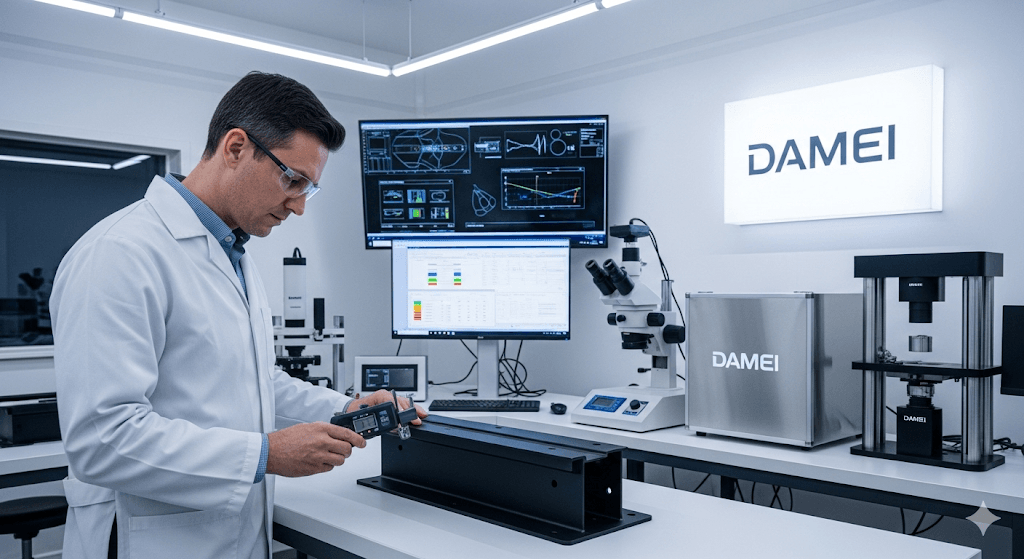
DAMEI’s professional technical team utilizes advanced laboratory equipment to solve complex coating application issues.
A: Poor adhesion is 90% due to errors in the pre-treatment process. If oil, dust, rust, or an oxide layer on the workpiece surface are not completely removed before spraying, the powder cannot bond tightly with the substrate. When conducting powder coating troubleshooting for adhesion failure, we recommend focusing on these three critical steps:
A: Bubbles, craters, and pinholes are typically caused by trapped gas during the coating process. This gas can come from outgassing of the substrate itself, or from moisture, oil, or solvent evaporation on the substrate surface during the heating cycle.
To resolve this issue during your powder coating troubleshooting routine, DAMEI recommends you check the following variables:
A: Color variation is a frustrating defect that is usually related to the consistency of the spraying equipment setup and uneven baking conditions.
To tackle color inconsistency, use these powder coating troubleshooting strategies:
Follow Manufacturer Guidelines: Different powders have distinct chemical formulations. Always strictly follow the technical specifications and exact curing curves provided by DAMEI for each specific product line.
Optimize Spraying Equipment: Constantly monitor and adjust the spray gun’s voltage, micro-amperage, powder output volume, and spraying distance to ensure a uniform coating thickness across the entire batch.
Control Baking Uniformity: Ensure the temperature distribution inside the curing oven is perfectly consistent. Air circulation should be checked regularly to avoid localized zones that are too hot (causing over-baking/darkening) or too cold (causing under-baking).
Conclusion:
Behind every coating problem is a scientific solution. The value of DAMEIlies not only in providing high-quality powder but also in our professional technical team. No matter what challenge you encounter, we are ready to work with you to provide tailored technical support and ensure your products are flawless.
Choosing DAMEI means choosing a partner who can solve problems.
Contact Us
🌐 Website: https://dameipowdercoating.com
📧 Email: info@dameipowdercoating.com
📱 WhatsApp: +86 15349299480

July 5, 2026
Laden...


